
From The Blog
-
ConnectWise Slash and Grab Flaw Once Again Shows the Value of Input Validation We talk to Huntress About its Impact
Written by Sean KalinichAlthough the news of the infamous ConnectWise flaw which allowed for the creation of admin accounts is a bit cold, it still is one that…Written on Tuesday, 19 March 2024 12:44 in Security Talk Read 703 times Read more...
-
Social Manipulation as a Service – When the Bots on Twitter get their Check marks
Written by Sean KalinichWhen I started DecryptedTech it was to counter all the crap marketing I saw from component makers. I wanted to prove people with a clean…Written on Monday, 04 March 2024 16:17 in Editorials Read 1581 times Read more...
-
To Release or not to Release a PoC or OST That is the Question
Written by Sean KalinichThere is (and always has been) a debate about the ethics and impact of the release of Proof-of-Concept Exploit for an identified vulnerability and Open-Source…Written on Monday, 26 February 2024 13:05 in Security Talk Read 1114 times Read more...
-
There was an Important Lesson Learned in the LockBit Takedown and it was Not About Threat Groups
Written by Sean KalinichIn what could be called a fantastic move, global law enforcement agencies attacked and took down LockBit’s infrastructure. The day of the event was filled…Written on Thursday, 22 February 2024 12:20 in Security Talk Read 1086 times Read more...
-
NetSPI’s Offensive Security Offering Leverages Subject Matter Experts to Enhance Pen Testing
Written by Sean KalinichBlack Hat 2023 Las Vegas. The term offensive security has always been an interesting one for me. On the surface is brings to mind reaching…Written on Tuesday, 12 September 2023 17:05 in Security Talk Read 2134 times Read more...
-
Black Kite Looks to Offer a Better View of Risk in a Rapidly Changing Threat Landscape
Written by Sean KalinichBlack Hat 2023 – Las Vegas. Risk is an interesting subject and has many different meanings to many different people. For the most part Risk…Written on Tuesday, 12 September 2023 14:56 in Security Talk Read 1857 times Read more...
-
Microsoft Finally Reveals how they Believe a Consumer Signing Key was Stollen
Written by Sean KalinichIn May of 2023 a few sensitive accounts reported to Microsoft that their environments appeared to be compromised. Due to the nature of these accounts,…Written on Thursday, 07 September 2023 14:40 in Security Talk Read 2126 times Read more...
-
Mandiant Releases a Detailed Look at the Campaign Targeting Barracuda Email Security Gateways, I Take a Look at What this all Might Mean
Written by Sean KalinichThe recent attack that leveraged a 0-Day vulnerability to compromise a number of Barracuda Email Security Gateway appliances (physical and virtual, but not cloud) was…Written on Wednesday, 30 August 2023 16:09 in Security Talk Read 2099 times Read more...
-
Threat Groups Return to Targeting Developers in Recent Software Supply Chain Attacks
Written by Sean KalinichThere is a topic of conversation that really needs to be talked about in the open. It is the danger of developer systems (personal and…Written on Wednesday, 30 August 2023 13:29 in Security Talk Read 1894 times Read more...
Recent Comments
- Sean, this is a fantastic review of a beautiful game. I do agree with you… Written by Jacob 2023-05-19 14:17:50 Jedi Survivor – The Quick, Dirty, and Limited Spoilers Review
- Great post. Very interesting read but is the reality we are currently facing. Written by JP 2023-05-03 02:33:53 The Dangers of AI; I Think I Have Seen this Movie Before
- I was wondering if you have tested the microphone audio frequency for the Asus HS-1000W? Written by Maciej 2020-12-18 14:09:33 Asus HS-1000W wireless headset impresses us in the lab
- Thanks for review. I appreciate hearing from a real pro as opposed to the blogger… Written by Keith 2019-06-18 04:22:36 The Red Hydrogen One, Possibly One of the Most “misunderstood” Phones Out
- Have yet to see the real impact but in the consumer segment, ryzen series are… Written by sushant 2018-12-23 10:12:12 AMD’s 11-year journey to relevance gets an epic finish.
Most Read
- Microsoft Fail - Start Button Back in Windows 8.1 But No Start Menu Written on Thursday, 30 May 2013 15:33 in News Be the first to comment! Read 116527 times Read more...
- We take a look at the NETGEAR ProSafe WNDAP360 Dual-Band Wireless Access Point Written on Saturday, 07 April 2012 00:17 in Pro Storage and Networking Be the first to comment! Read 87485 times Read more...
- Synology DS1512+ Five-Bay NAS Performance Review Written on Tuesday, 12 June 2012 20:31 in Pro Storage and Networking Be the first to comment! Read 82033 times Read more...
- Gigabyte G1.Sniper M3 Design And Feature Review Written on Sunday, 19 August 2012 22:35 in Enthusiast Motherboards Be the first to comment! Read 80337 times Read more...
- The Asus P8Z77-M Pro Brings Exceptional Performance and Value to the Lab Written on Monday, 23 April 2012 13:02 in Consumer Motherboards Be the first to comment! Read 70990 times Read more...
Displaying items by tag: ARM
Nvidia-ARM Deall off Citing Regulatory Challenges
In September 2020 Nvidia announced that it was in talks to acquire ARM Holdings from SoftBank Group Corp. The deal was not surprising, but it did send waves through the industry. The concerns around this deal were and are the same as the ones currently surrounding the Microsoft-Activision deal. Given the level of competition in the industry, would Nvidia use its new purchase to create roadblocks for their competition? Nvidia has always maintained that they would never do anything like this, but their assurances were never enough to get past regulators.
nVidia moves Tegra from Smartphones to Gaming and Automotive
Back when nVidia first launched the original Tegra SoC CEO Jen-Hsun Huang stated that it would change the face of media players, phones and tablets. He fully expected Tegra to become more than 50% of nVidia’s business (revenue) and put the green team to work making that happen. After a few months of hearing about the advantages of Tegra I was finally able to put one to the test in the form of the now-gone ZuneHD. It was an impressive experience and I still have and use that device on an almost daily basis.
ARM positive about budget smartphones

Emerging markets are still dependent on cheap cell phones. Smartphone breakthrough on these kind of markets is currently stalled by the relatively high prices.
Is OnePlus One the flagship killer this year?

Long announced as the best mobile phone in the world, One was officially unveiled today, the first Chinese mobile phone by manufacturer OnePlus. The official website calls this device "2014 Flagship killer" and judging by the price and the offered feature it really could justify this pretentious name.
Samsung Galaxy S5 mini specs leaked
On the Internet appeared future specifications of Samsung Galaxy S5 Mini smartphone. As in the previous generation Mini version will be a smaller version of the top models of the company, in this case Samsung Galaxy S5 devices, with lower performance, and lower cost.
64-bit mobile SoC from MediaTek

After the 8-core processor codenamed MT6595, MediaTek company also announced the MT6732, its first 64-bit SoC. The chip has four ARM Cortex-A53 cores clocked at 1.5 GHz and the Mali T760 GPU with support for OpenGL 3.0 and OpenCL 1.2.
TSMC to manufacture Apple's A8 chips instead of Samsung
Apple's new A8 processor will be manufactured by Taiwan Semiconductor Manufacturing Company, according to sources in Taiwanese TechNews. Samsung would so be left out of orders for the production of processors for Apple.
Calxeda shutting down
Calxeda, one of the first companies that introduced ARM chips for servers, is closing its doors and starts the sale of its intellectual property.
2 million of Raspberry Pi's sold
Raspberry Pi went on sale in late February last year. By the end of October this year, it was sold in over two million copies, as it is reported.
Everyone wants to have a 64-bit processor in their device
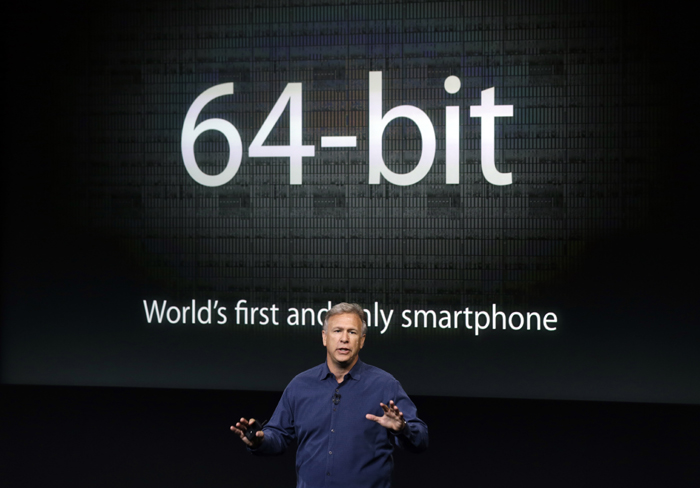 |
It seems that Apple's launch of iPhone 5S device, the first smartphone with a 64-bit processor initiated a new trend on the market. Apple iPhone 5S as it is known brings its own 64-bit A7 processor with more than 1 billion transistors and a new 64-bit operating system, iOS 7.